ANALYSIS: When the weather becomes the news. . .
- Aug 5, 2025
- 3 min read
We sit up and take note when the weather becomes the news.
In the news world, the headlines are presented first. The weather comes as an afterthought.
Weather typically becomes news when it is considered severe or impactful, such as during a hurricane, heavy rainstorm, or tornado. The National Weather Service (NWS) issues warnings for such events, which are broadcast on various media platforms. Additionally, weather reports are a staple of local news, often beginning newscasts and being updated multiple times throughout the broadcast.
Sure, the world stopped when Hurricane Helene struck Greenville in September of 2024. Boy, was that news or what!
Then, there are other obvious matters, though not traumatic.
Ordinary citizens can, then, notice highly unusual weather trends, making the weather a topic of curiosity and hot discussion.
Whether amateur or professional, weather forecasters have been around for centuries. Two thousand years ago, Jesus even redressed or chided pharisaical forecasters of his day by pointing out their adroit ability to predict rain, but they failed to discern the time of divine judgment. — Matthew 16:2,3.
Sure, it is important today also to predict rain, but are humans facing Apocalypse Now!
Typical weather terms, though often repeated and driving us into numbness, are confusing or even meaningless to many. Weather terminology thus becomes fodder for animated conversation.
New-age jet stream trends
Global warming is causing changes to jet stream behavior. Specifically, it's leading to a faster, more erratic jet stream with increased "waviness" and potentially stronger winds. This can result in more extreme weather events, including heat waves, cold snaps, and increased instances of blocking weather patterns.
According to one meteorologist, areas south of jet streams are particularly vulnerable to sporadic warming changes. So, to understand and possibly forecast weather, one needs to know the established patterns of dominant jet streams and their breaking trends.
Turbulence
Turbulence in weather refers to irregular or erratic atmospheric motion, creating bumpy or unsteady conditions in the air. It's characterized by sudden shifts in airflow, resulting in up-and-down and side-to-side movements of air. Turbulence can range in intensity from light and barely noticeable to severe, potentially causing significant aircraft disturbances.
Plane passengers during such severe turbulence can cause them to clutch and wring their hands, mumbling and praying intensely in tears.
For such hapless passengers, the weather is breaking news!
Wind shear
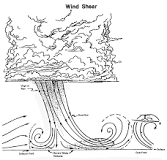
An important element of wind shear is a rapid change in the variation in wind velocity occurring along a direction at right angles to the wind’s direction and tending to exert a turning (whirling) force.
Wind shear is a change in wind speed and/or direction over a short distance. It can occur either horizontally or vertically and is most often associated with strong temperature inversions or density gradients. Wind shear can occur at high or low altitudes.
20% chance of rain
A 20% chance of rain, according to meteorologists, means there is a 20% probability that it will rain at any given point within the specified forecast area. It does not mean it will rain for 20% of the time or cover 20% of the area. Essentially, there's an 80% chance it will remain dry.
Global warming
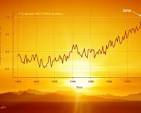
Global warming refers to the long-term increase in Earth's average surface temperature, primarily caused by human activities that release greenhouse gases into the atmosphere. These gases, like carbon dioxide and methane, trap heat and lead to a gradual warming of the planet. This warming is causing a range of environmental changes, including rising sea levels, extreme weather events, and disruptions to ecosystems.
It is gratifying that most citizens have a good grasp of what it means and the documentation that establishes it as real.
But what is baffling is that politicians disregard the irrefutable facts under the guise of fake news. Both the occurrence of global warming and its stiff resistance by stockholders, and this combined impact on the weather, make the news.
In all this quagmire and confusion, where is our vice president of common sense?
Can the Chief Meteorologist guide us all through this turbulence?
This leaves many wondering if we will soon have no weather to discuss or only a black silence.


